I should start by saying I don’t have a vendetta against LinkedIn company pages. They’re useful. They give people somewhere to check if you exist, see what you’ve been up to, and confirm you haven’t quietly abandoned the market like a half-finished office plant. But let’s be honest. Most company pages are not where trust is being built.
They are where announcements go to behave themselves. They are where you celebrate your people (very important) and where product updates reach your existing customer feeds.
That doesn’t make them pointless. It just means we need to stop asking them to do a job they were never very good at in the first place. If a buyer wants the official version of your story, your company page can help. If they want to know whether your business has a credible point of view, understands their world, and is worth listening to beyond the sales deck, they’re probably looking somewhere else.
More often than not, they’re looking at your people. Your executives. Your specialists. The creators in your category. The analysts, commentators and practitioners who can explain what’s happening without sounding like they’ve been trapped inside a messaging house for six weeks.
This is where the shift is happening. The old model was: build the brand channel, post consistently, push people towards the website, hope the algorithm is feeling generous.
The newer model is messier, but much more interesting. Build visibility around the category. Put credible people at the centre of the conversation. Make sure your point of view shows up across earned, owned, shared and creator-led spaces. Then measure whether that visibility is actually improving how people and AI systems understand you.
A bit less “please engage with every page of our carousel”
A bit more “are we becoming impossible to ignore in the conversations that matter?”
AI has changed the stakes
The other reason this matters is that discovery is changing. Buyers are not just moving through neat funnels anymore. They ask ChatGPT. They check Perplexity. They search Reddit. They listen to podcasts. They scan analyst quotes. They look at LinkedIn. They compare what the company says with what credible third parties say. Then they arrive in a sales conversation already carrying a half-formed opinion about who knows their stuff. This is where the company page starts to look very small.
AI-powered discovery doesn’t see your comms plan in tidy channel columns. It sees signals. Who is talking about you? What are they saying? Is the message consistent? Are there named experts? Is there proof? Is the content fresh? Is it coming from sources people trust?
That is the thinking behind VISTA: Visibility, Identification, Signals, Trust and Attribution.
When you look at LinkedIn through that lens, the company page becomes one signal. Useful, but not enough. Executive voices become trust signals. Creator partnerships become third-party signals. Earned media becomes authority. Owned content becomes the place where the thinking can live in full. The job is not to post more. The job is to build a system of credibility.
The company page has become the reception desk
A company page still has a role. It’s your reception desk. It should be tidy, clear, on-brand and not weirdly out of date. It should carry product news, hiring updates, campaign launches, customer proof and those corporate milestone posts that everyone claims to hate but still checks before a meeting.
The problem comes when brands treat the company page as the centre of gravity for their social strategy. Especially in B2B, where trust is slow, buying groups are complicated, and nobody is making a serious purchase because a logo posted “three trends shaping the future of innovation”.
People trust people faster than they trust institutions. And that has only become more important in the world of AI slop. Not always, not blindly, and certainly not if the person is clearly reading from a corporate hymn sheet. But a good executive voice can do something a company page struggles to do: interpret.
An executive can explain why a market is moving. They can challenge lazy thinking. They can talk about what customers are really asking for. They can connect business priorities to lived leadership experience. They can show judgement, not just awareness. And judgement is what buyers are often looking for.
Your company page can say: “We help organisations modernise their data infrastructure.”
A credible executive can say: “The companies struggling most with AI adoption aren’t short of tools. They’re short of trust in their own data, clarity on ownership, and leaders willing to make boring infrastructure decisions before chasing exciting demos.”
Repeat after me: One is messaging. The other is thought leadership.
But executive visibility is not personal branding
This is where people sometimes get twitchy. Executive visibility can sound a bit too close to personal brand, and personal brand can sound a bit too close to a person posting about waking up at 4:30am and what that’s taught them about B2B marketing. That’s not the game.
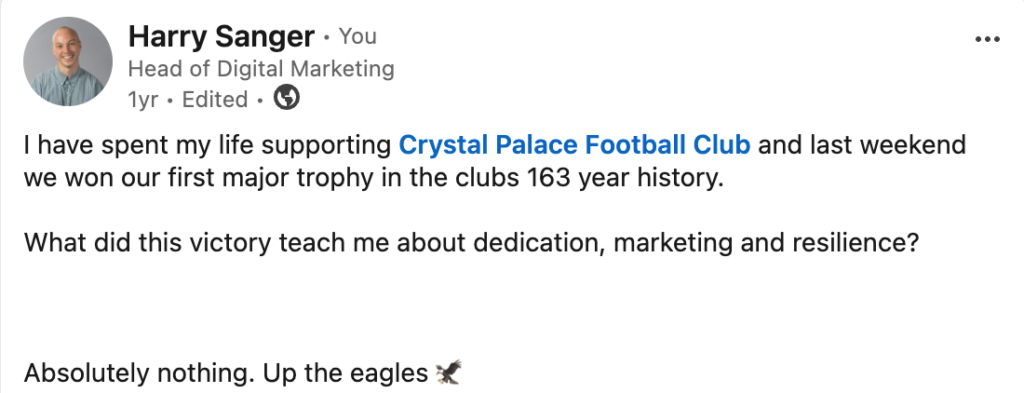
The strongest executive programmes are not about making leaders famous. They’re about making expertise visible. There’s a difference.
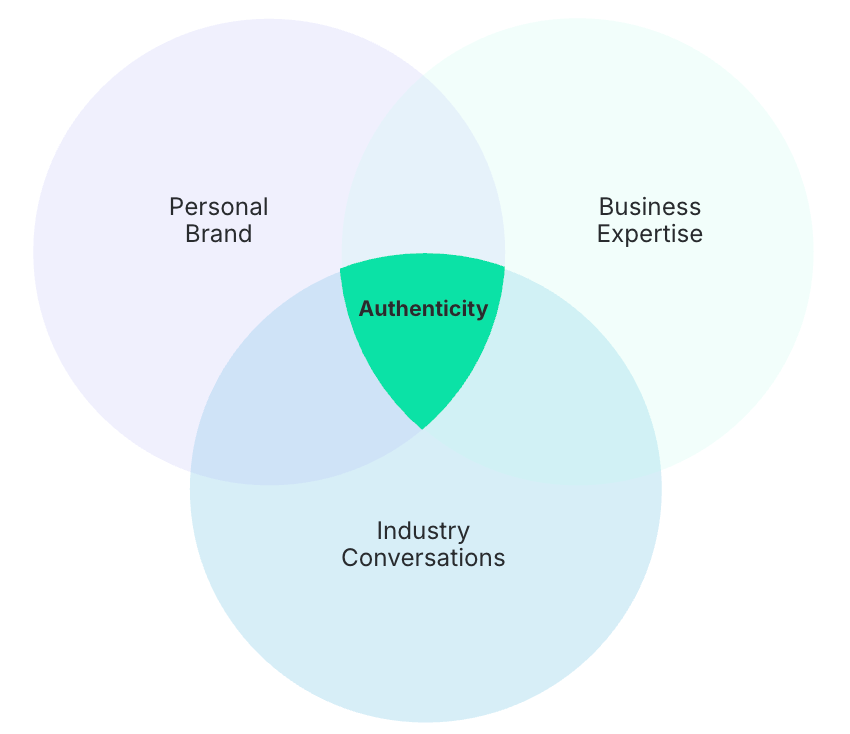
Our Magnetic Executive thinking is built around a simple idea: authentic thought leadership sits at the intersection of business expertise and personal values. If you only have the expertise, the content becomes dry. If you only have the personal bit, it becomes therapy with a job title. The magic is in the overlap.
That means finding the topics an executive can credibly own, then shaping them through their actual leadership style. What do they care about? What do they know that others don’t? Where are they willing to have a view? What do they believe about the future of their category that is useful, distinctive and commercially relevant?
A proper executive visibility programme needs research, narrative territory, voice development, content planning, engagement strategy, PR integration and measurement. It should connect LinkedIn posts to bylines, interviews, events, podcasts, customer conversations and the wider brand story. Otherwise you just end up with a senior person posting nicely polished nothingness into the void. And LinkedIn already has plenty of that. It does not need our help.
So, does your company page matter?
Yes. Just not in the way many brands want it to. It matters as proof. It matters as infrastructure. It matters as a home for your official story. But it is not, on its own, a trust engine.
For that, you need people. You need clear category ownership. You need executives with something to say. You need creators and KOLs who bring external credibility. You need earned media, owned content and community engagement all reinforcing the same strategic territories.
The brands that win on LinkedIn now won’t be the ones posting the most from the company page. They’ll be the ones whose people become associated with the right conversations before the buyer is even in-market.
Because by the time someone lands on your company page, they may already have made up half their mind. The question is whether your wider visibility helped shape that opinion, or whether your brand was politely waiting behind the reception desk with a pinned post from six weeks ago.